Kawepūrongo
News
Te Wai Takamori o Te Awa Kairangi Programme and SH2 Melling Transport Improvements Community Update 29: 2 April 2026
Newsletters, 2 April 2026This programme update provides information on the NZ Transport Agency's SH2 Melling Transport Improvements, Greater Wellington's flood protection work, and Hutt City Council's urban revitalisation, which are part of Te Wai Takamori o Te Awa Kairangi.
Formerly known as RiverLink, the programme carries the gifted name Te Wai Takamori o Te Awa Kairangi, meaning 'the soothing waters of the Hutt River'.
We know there's a lot happening and this is affecting travel times around the city. Disruption may be inconvenient at times, but what's being delivered will bring long-term benefits to Lower Hutt.
Please respect roadworkers and travel safety through worksites. Stick to the posted speed limits, drive carefully, and follow signage and any instructions you receive.
We appreciate your patience and understanding as we deliver all work in this programme.
Check out the update below for more information about our current activities and what's coming up next.
Environmental care on the ground
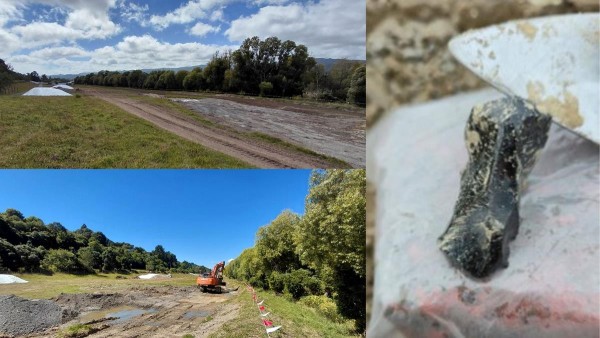
Te Awa Kairangi/Hutt River is a taonga (treasure). That's why how we work across the city, is just as important as the projects themselves. Guided by Mana Whenua, the significance of the river and its surrounding environment shape how construction is approached. The stories below share a glimpse of what that looks like on the ground.
Caring for taonga species
Taonga species such as lizards, invertebrates, birds and other valued species, live along Te Awa Kairangi/Hutt River and are an important part of the ecosystem connected to it. Protecting them during construction is part of the responsibility this programme carries.
As construction progresses, low-growing plants and shrubs are cleared to make way for works. Rather than uprooting everything at once, the team clears from the top down. Moko kākāriki (Wellington green gecko), mokomoko (common skinks) and other small species shelter at the base of plants and in the ground beneath them. Clearing from the top gives them time to move away safely.
Clearing is only permitted between May and September to reduce the impact on wildlife during sensitive seasons. Before any clearing begins, lizards and invertebrates are carefully relocated at least four weeks in advance to give them time to settle in a safe area nearby.
The cleared plants are mulched and used on site to stabilise exposed soil and reduce the risk of sediment reaching the river.
Obsidian core discovery
For centuries, pā and kāinga (villages and settlements) sat close to Te Awa Kairangi/Hutt River and its tributaries. The river was a vital source of food, and the tūpuna (ancestors) who moved through here are remembered in what we find underground. Their presence runs deep along the river, and construction is already bringing it to the surface.
During early earthworks beneath Pharazyn Street, an obsidian core was found. Obsidian is a volcanic glass traditionally used by Māori for making cutting tools. It does not occur naturally in this area, someone brought it here.
In 2012, a 300-year-old tōtara waka was found 4-metres below ground during construction work in Woburn and returned to iwi in 2022.
When a taonga (treasure) like this is found, work stops, the area is secured, and decisions about how it is cared for are made in partnership with Mana Whenua, iwi representatives with ancestral connections to this place. It may not be the last taonga we find.
Caring for the awa while we work
Keeping contaminants out of Te Awa Kairangi/Hutt River is one of the most important responsibilities on this programme.
Around the edges of the work areas, low walls of compacted earth called perimeter bunds act as barriers, catching water and sediment before it can travel beyond the site boundary, into stormwater drains and ultimately into the river. Where existing grass and turf is intact, it is used to hold the bunds in place rather than synthetic materials that would end up in landfill.
This summer has brought plenty of rain and it is vital the team plans around it. When the weather is fine, the focus is on making progress. Before the rain returns, the priority shifts to making sure the site is secure and the controls we have in place are holding. When rain falls on an active construction site, it picks up fine soil particles and carries them toward waterways. The team works with the natural shape of the land to slow that water down and encourage it to soak into the ground, rather than run toward waterways or the river.
On an exposed construction site, wind carries dust across the site and beyond. Water carts operate on site to dampen down exposed surfaces and keep dust from travelling. Recycled asphalt, the ground-down material from old road surfaces being removed as part of the project, is also being used to seal haul roads and car parks, cutting down on both dust and mud.
Update: Eastern zone transport improvements
Queens Drive/High Street works ongoing
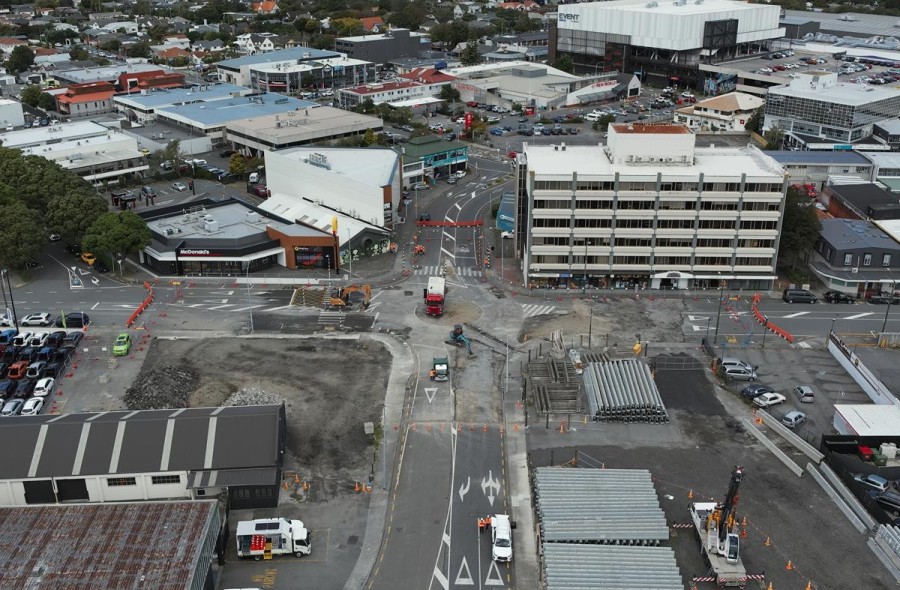
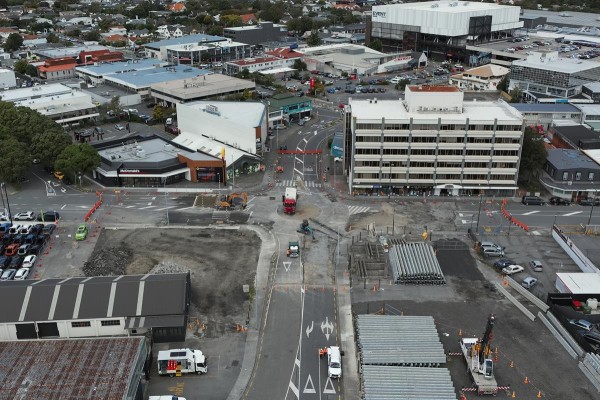
Work to remove the existing roundabout at Queens Drive/High Street and replace it with a traffic light intersection continues. This is to prepare the area for increased traffic volumes when Queens Drive becomes the access point from the new interchange onto State Highway 2.
In addition to the above changes, we are relocating underground services like power, water, gas, and fibre, and installing new drainage and stormwater systems, new footpaths, traffic islands, new signage and road markings.
Now that all existing services have been located (including several “ghost services” – those which have been decommissioned but never removed), we’re progressing with the installation of new fibre services across the intersection.
Throughout April, we’ll be diverting the water main, low-voltage power cables, and additional Chorus services and are currently removing layers of asphalt of the existing intersection.
Once open in December, this intersection will have a pavement that is durable and high-performing, with a lifetime of around 25 years.
These activities are some of the most disruptive during the construction of the SH2 Melling Transport Improvements project, and we’re acutely aware of the impact it's having on how people move around the area.
The only other way we could make the necessary changes to the intersection would involve 18 to 24 months of stop/go traffic management, weekend and night closures, and ultimately, a less safe environment for you to drive through and for our crews to work in. This closure will allow us to get far more work done in a much shorter period.
Ongoing long-term closures
There are ongoing long-term closures on Queens Drive/High Street intersection, and Queens Drive between High and Rutherford Street.
Northern section of the Riverbank car park
Main work in the northern section of the Riverbank car park currently involves identification and relocation of services, as well as installing a new stormwater outlet.
This work is happening now so we can start ground improvements and stabilisation where the bridge will land.
For the new bridge, we'll have to build some of the largest bridge piles to ever be constructed in New Zealand, with each one around 3.3 metres in diameter, over 30 metres deep, and requiring around 300m³ of concrete per pile – around 50 concrete trucks.
Update: Western zone transport improvements
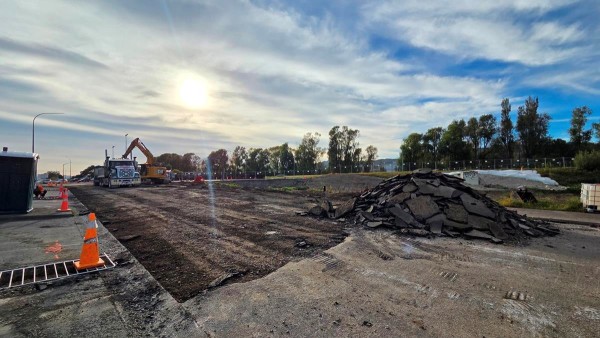
Since we set up our project site six months ago, workers have been relocating and upgrading major underground services, making progress on ground improvements and piling activities.
Most of this has been in the previous Block Road and Pharazyn Street areas and can be seen from the state highway. This will be where the main parts of the interchange will be built.
You’ll have noticed that we've also relocated Melling train station. Moving it was an important step on enabling the above ground improvements to continue. This building will be incorporated into the new station facilities once complete.
Crews have been making good progress on relining the western hills main sewer line with a seamless 'pipe within a pipe'.
This is a crucial part of the interchange project as the existing pipe is in poor condition and passes right through our construction area.
Some interesting facts about this work:
- approximately 40,000m² of material has been moved to site so far. This will help with ground settlement for the western hills main sewer pipe relocation
- once the new interchange is complete it will sit approximately 10-13metres above where the state highway sits now
- around 1,700 ground improvement piles will be installed in this area over the next few years, to help stabilise the ground and create a solid foundation for the interchange to sit on. To date, we have completed 128 piles, and are currently working on the next stage (188 piles)
- each pile ranges from around six to 13.5m in depth and are 600mm in diameter. All up, approximately 1,400 tonnes of steel and 4,500m³ of concrete will be needed for this. Laid end to end, the piles would stretch around 16km
Ongoing long-term closures
There are ongoing long-term closures on Pharazyn Street – the road is closed from north of Marsden Street. Block Road is permanently closed.
Southbound closures on State Highway 2 this week
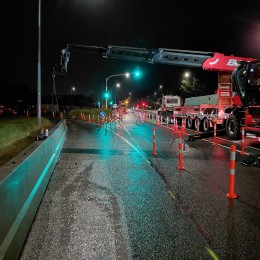
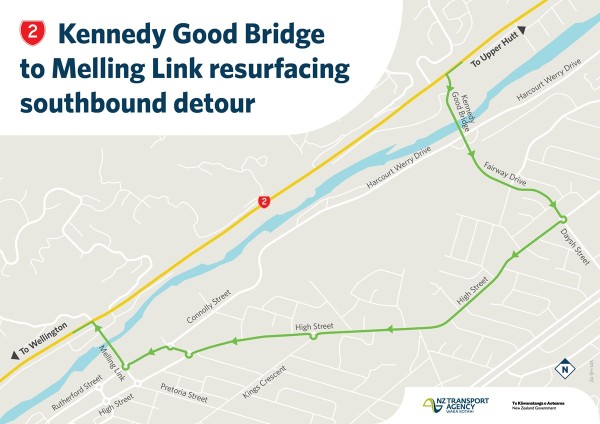
Plan ahead for southbound closures on State Highway 2 from Kennedy Good Bridge to Melling Link from Tuesday 7 April to Thursday 9 April, between 9pm and 4am.
The closure is necessary to allow installation of new steel safety barriers north of Melling Link. These barriers are a part of alterations needed as the footprint of the project site begins to affect the state highway corridor.
Access to Harbour View Road and Melling Bridge will remain open at all times.
Northbound traffic is not affected.
Southbound drivers heading towards Wellington will need to follow local road detours through Lower Hutt. Please allow extra travel time and follow all posted speed limits through residential areas.
Wellington Electricity works continue
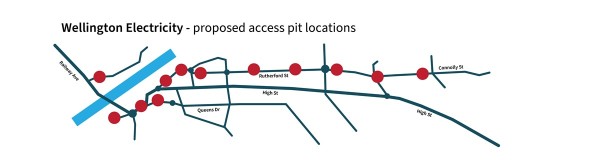
Wellington Electricity is preparing the next major stage of its cable relocation programme: digging a series of access pits (joint bays) along the central city route. These access pits are an essential step in preparing the area for the new Melling Bridge, upgraded stopbanks, and improved walking and cycling connections.
Since late 2025, crews have been busy trenching through key streets to install new underground ducts. There are still some trenching works to be completed around the Andrews Avenue substation and information on any associated road closures will be detailed on the programme Facebook page.
With this work due for completion by the end of April, the focus now shifts to these deeper joint bays, which will allow new electricity cables to be pulled through the ducts already in the ground. This will ensure power services can be safely relocated out of the future construction zone, helping the whole project stay on schedule.
The joint bays work will be carried out section by section to keep disruption as low as possible. Unlike the earlier trenching phase, this stage is expected to be less intrusive, although some traffic management and lane changes will still be needed around each pit for everyone’s safety. Crews will be working during the day, and access for residents and businesses will be maintained wherever possible.
As work progresses along the route, the team will notify nearby businesses and residents in advance before works begin in their area. You may notice short‑term changes such as temporary parking adjustments, construction noise, or contractors working near building entrances, but efforts will be made to minimise impacts and keep people moving smoothly.
The joint bays will be located at intervals along the cable route, which includes Connolly Street, Rutherford Street, Dudley Street, Andrews Avenue, Daly Street, the southern Queens Drive roundabout area, and Marsden Street. The full schedule and detailed maps will be available soon on the Wellington Electricity project page.
This work is expected to run through to August 2026.
Greater Wellington and Wellington Electricity thank you for your patience over recent months while this essential underground cable relocation work to support the wider programme has been taking place.
We appreciate the patience and support of everyone affected as we work together to build a safer, more resilient, and better-connected city.
If you have questions or concerns about how this work may affect you, please get in touch at info@teawakairangi.co.nz.
Daly street demolition underway
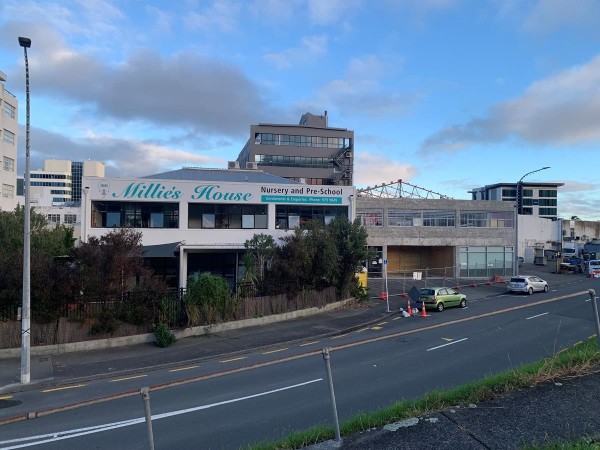
Work is about to start on the demolition of the buildings at 4 and 5 Daly Street. The buildings are being removed to make way for a new stopbank that will significantly improve flood protection for central Lower Hutt.
The demolition will take place in two main stages. The first stage involves removing the deck and balcony at 5 Daly Street. This creates safe access for the rest of the work.
The second stage is the full demolition of both buildings. Specialist machinery will carefully take the structures down piece by piece, keeping all debris contained within the site.
From April 13, there will also be work underway by Wellington Electricity around the Daly Street/Andrews Avenue roundabout and the local substation. This activity is separate from the demolition but will require traffic management on Daly Street. While this is in place, full access and parking will remain available for all Andrews Avenue tenants and businesses.
You can expect to see demolition activity picking up from April 9, including fencing around the site and trucks removing materials. The team will keep disruption as low as possible. Noise barriers, sediment controls, and regular site checks will be in place to protect the surrounding area. Footpaths and bike routes may be temporarily redirected, but safe access will always be maintained, with clear signage to help guide people around the work area.
As each part of the demolition is completed, materials will be sorted and recycled. Concrete and steel will be separated and sent to local recycling facilities, with other waste disposed of safely.
Once the buildings are down and the site is cleared (approximately mid May), we’ll be ready to move into the next phase: preparing the area for the construction of the new Daly Street stopbank. This will be one of the key features of the upgraded flood protection system running through the central city.
City Link Bridge reaches key milestone
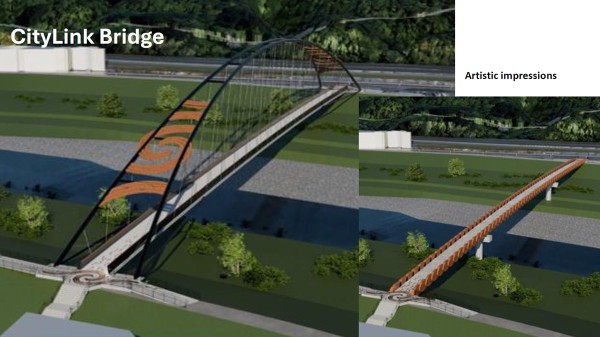
We’ve reached an exciting milestone for the City Link Bridge, with Hutt City Council now going to market for registrations of interest from teams to design and build the bridge.
The City Link Bridge will be a vital new walking and cycling connection between Lower Hutt’s city centre and the future Melling train station. It will also link into wider paths along Te Awa Kairangi/Hutt River and routes toward Wellington, including Te Ara Tupua.
At around 190-metres long and 5.5-metres wide, the bridge is being designed to provide a safe, accessible route for people walking, biking, and using mobility aids.
Over the coming months, we’ll be reviewing proposals and shortlisting teams. We hope to appoint a contractor later this year. We'll then move into the design phase, with construction aiming to start in the second half of 2027.
This is an important step forward in delivering a more connected and accessible city.
Giving the river more room to move
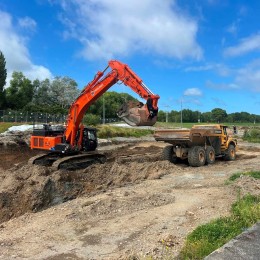
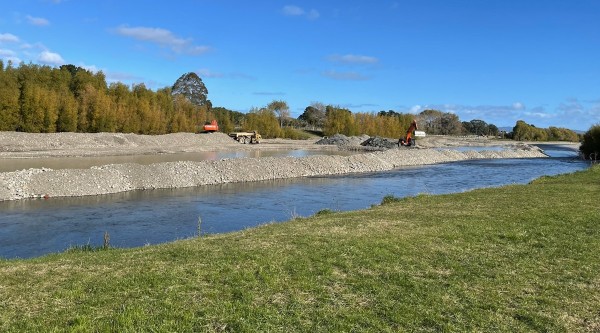
As part of the wider Te Wai Takamori o Te Awa Kairangi construction programme, Greater Wellington will soon begin planned gravel extraction in sections of Te Awa Kairangi/Hutt River just downstream of Kennedy Good Bridge. The work will ultimately lower the existing bed levels and help create beaches on both sides of the river between Kennedy Good and Ewen bridges, giving the river more room to move.
Gravel extraction is an important part of how we care for the river and protect surrounding communities. The gravel builds up in the riverbed over time and, if too much accumulates, it can raise river levels, increase erosion, and reduce the river’s capacity during floods. Carefully removing the gravel gives the river more room to flow safely and reduce the risk of flooding for homes, businesses, and infrastructure.
The work will involve heavy machinery operating in the river, and is carried out according to strict environmental rules.
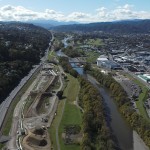
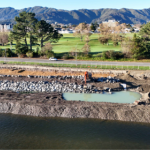
Our photos shows recent extractions that have taken place near key project areas to prepare the river corridor for construction and strengthen future flood protection works.
The work is expected to take around five months.
Riverbank car park to stay open longer
The southern end of the Riverbank car park will remain open until at least the end of 2026, with access continuing from Andrews Ave. This means around 700 parking spaces will remain available – enough to meet current peak demand.
This change follows updated planning, design and scheduling work for the wider Te Wai Takamori o Te Awa Kairangi programme and does not delay the overall timeline.
With the car park staying open for longer, the Riverbank Market now has the option to continue operating at its current location. We’ve heard from vendors and the market operator that they are keen to stay at this site. We’re continuing to work on next steps, including planning for the longer-term move to Dowse Square and the Civic Centre.
We’ll share further updates as planning progresses.
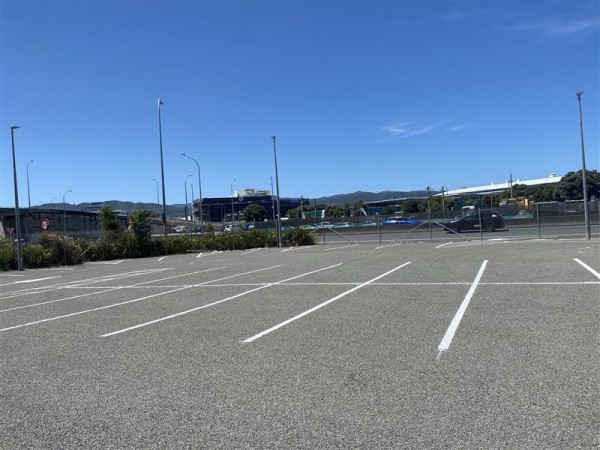
Reminder: Additional parking now available at Petone
With the Melling station closed, an additional temporary park and ride facility has been created at Petone to help mitigate disruption for commuters.
The new car park has over 100 new car parks within walking distance of the Petone station and will be operational until approximately 2031.
More information
Te Wai Takamori o Te Awa Kairangi includes the SH2 Melling Transport Improvements, crucial flood protection and river restoration work, and city centre infrastructure upgrades.
It is a partnership between Greater Wellington, Hutt City Council, NZ Transport Agency Waka Kotahi, Taranaki Whānui ki Te Upoko o Te Ika and Ngāti Toa Rangatira.
You can find out more about current work that's underway here.
Otherwise for more information on the projects that make up this transformational programme of work, please:
- visit our website
- like us on Facebook
- send us an email
- subscribe to our monthly newsletter